

Introduction
Saudi enterprises need to optimize business operations while facing mounting pressure. Customers expect instant responses. Competitors move faster every quarter. Vision 2030 demands modernization across every sector.
Cloud infrastructure offers a direct path to optimize business operations—but only when implemented strategically. If you’re already familiar with cloud basics and cost optimization, this guide takes you into practical territory: real challenges, proven solutions, and strategies that work.

Why Cloud is Essential to Optimize Business Operations Today
The shift isn’t optional anymore. Saudi Arabia’s Cloud First Policy pushes public sector entities toward cloud solutions. Private companies working with the government must follow. Those who don’t adapt fall behind.
Market projections tell the story clearly. Saudi Arabia’s cloud market will reach USD 124.8 billion by 2033. Organizations using cloud to optimize business operations gain advantages that legacy-bound competitors cannot match: instant scaling, weekly feature deployment, and real-time analytics.
Cost structures matter too. Vision 2030 demands financial agility. Cloud converts heavy capital expenses into flexible operational costs—essential for companies pursuing new market opportunities.
Overcoming Barriers to Optimize Business Operations Through Cloud
Moving to the cloud sounds simple. Reality involves obstacles. Here’s what Saudi businesses actually face and how to solve each challenge.
Data Sovereignty Solutions
Saudi regulations require certain data to stay within Kingdom borders. Major providers now operate local data centers—AWS, Microsoft Azure, and Oracle all maintain Saudi regions.
Organizations should map data classification early in the planning process, identifying regulated workloads and confirming in-Kingdom hosting availability before finalizing provider selection.
Closing the Skills Gap
Cloud expertise remains scarce locally. Many organizations depend on foreign consultants, limiting long-term capability building.
The solution lies in partnering with providers offering knowledge transfer. Alnafitha IT’s cloud solutions include training that builds internal team capabilities during implementation—not just deployment and handoff.
Managing Integration Complexity
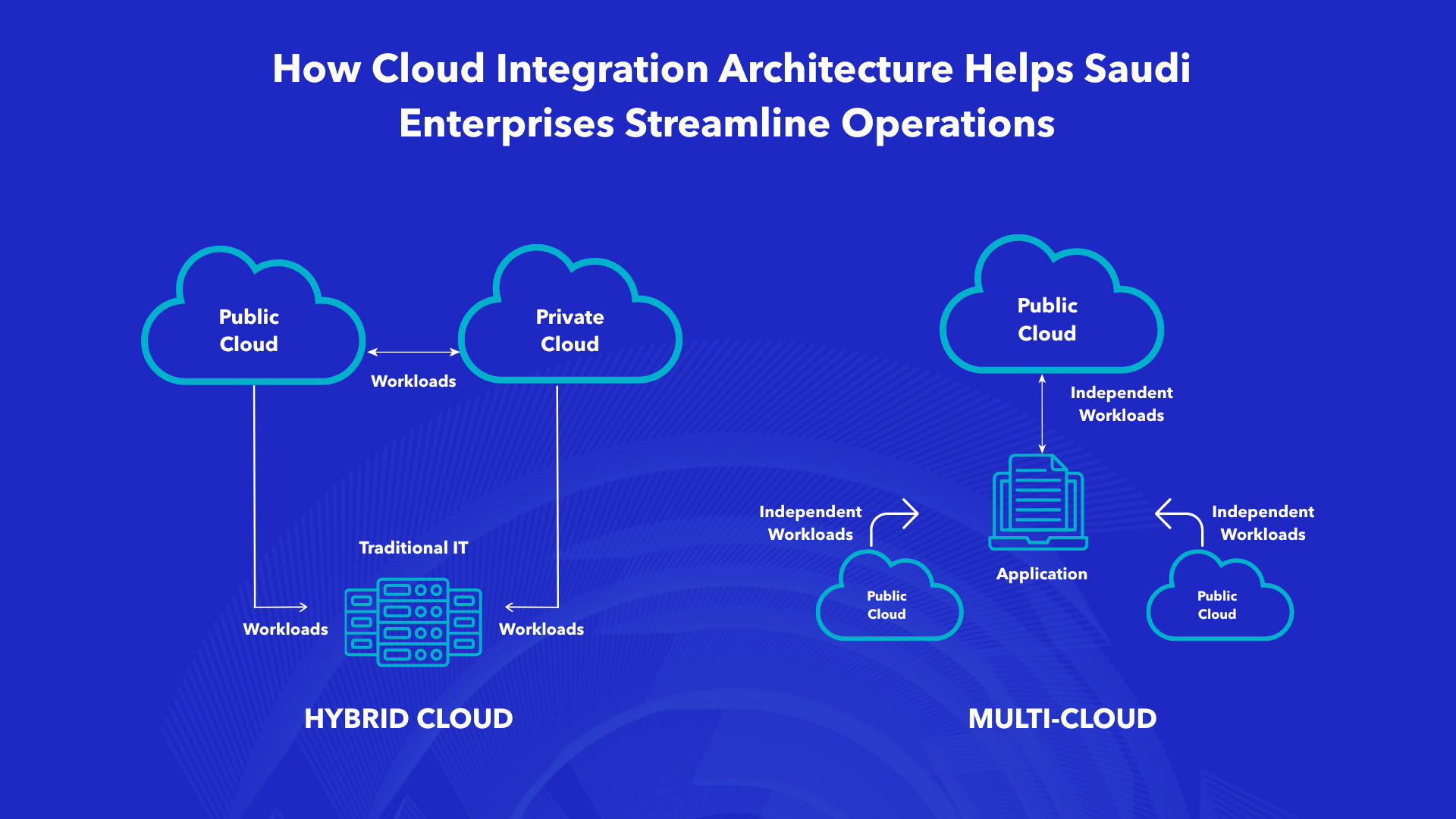
Legacy systems don’t disappear overnight. Hybrid environments create operational challenges during transition periods.
The practical approach is starting with standalone workloads, building internal experience before tackling interconnected systems.
Practical Ways Cloud Helps Optimize Business Operations
Results matter more than theory. Here’s what cloud adoption actually delivers.
Faster Decisions, Better Outcomes
Cloud analytics process data in minutes that previously took days. When markets shift, cloud-enabled organizations respond while competitors generate reports.
Alnafitha IT’s data analytics solutions connect directly to cloud environments, transforming raw data into decisions without manual processing delays.
Built-In Resilience
System failures happen. Cloud infrastructure includes automatic redundancy. When one component fails, others absorb the load instantly.
For Saudi businesses operating across Riyadh, Jeddah, and beyond, this resilience keeps all locations running even during local technical issues.
Automatic Scaling
Traditional infrastructure requires predicting needs months ahead. Cloud eliminates guessing. Resources scale based on actual demand—up during Ramadan traffic surges, down afterward. You optimize business operations continuously without manual intervention.
Regulatory Compliance When You Optimize Business Operations
Saudi Arabia’s regulatory environment has specific cloud requirements.
SAMA: Financial institutions face strict data handling rules. Cloud deployments must demonstrate appropriate controls and encryption.
NCA: The National Cybersecurity Authority mandates security controls that cloud infrastructure must support.
CITC: Telecommunications regulations affect cloud service selection. Local hosting options have expanded to meet these needs.
Compliance mapping should happen early in the architecture phase. Alnafitha IT’s cybersecurity solutions include Saudi-specific regulatory assessments that identify gaps before they become costly problems.
Your Roadmap to Optimize Business Operations with Cloud
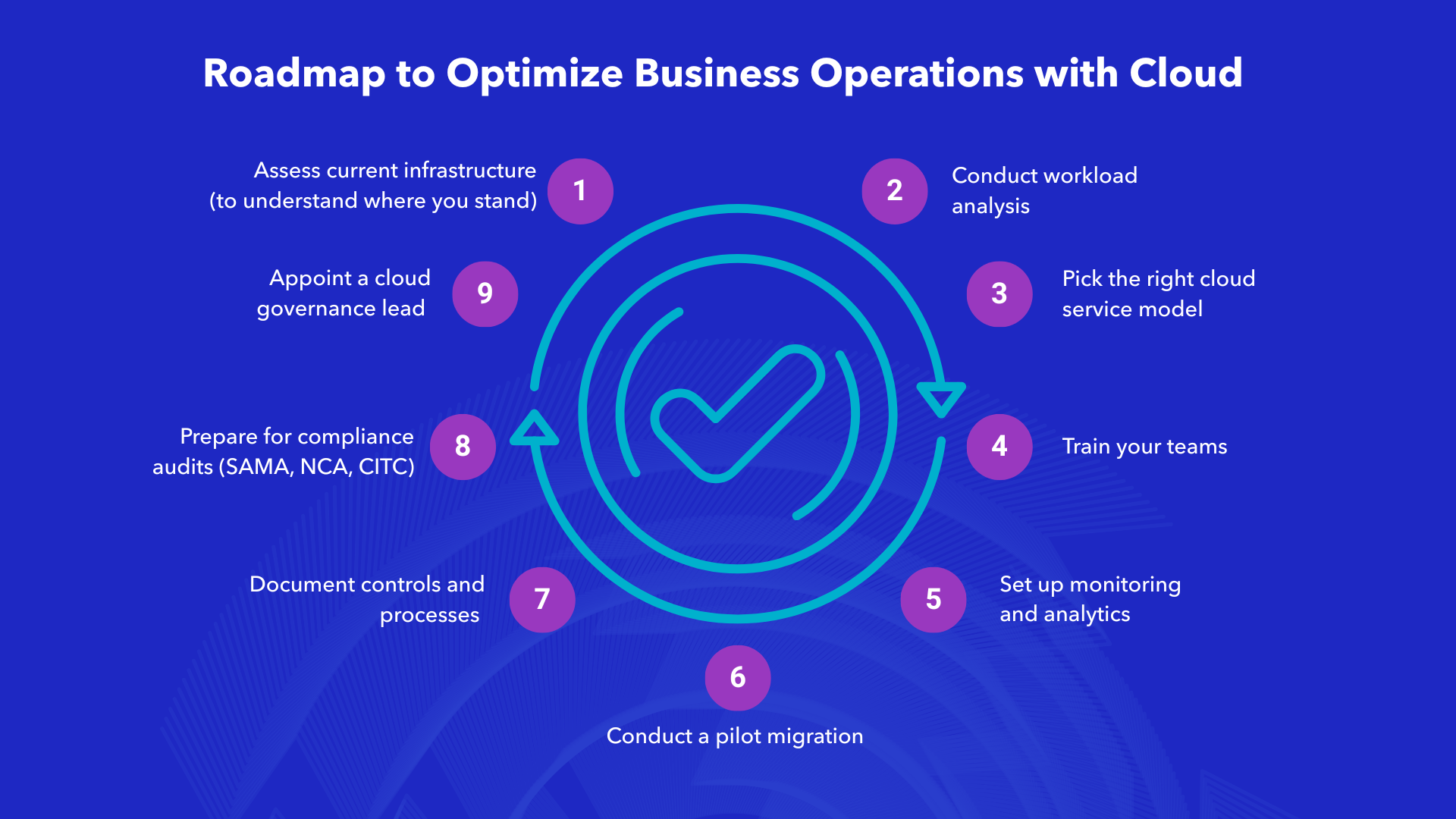
Successful adoption follows predictable patterns. Here’s the framework Saudi organizations use.
Phase 1: Assessment (4-6 weeks)
Document applications, dependencies, and data flows. Identify quick wins and complex cases requiring careful planning.
Phase 2: Design (6-8 weeks)
Select appropriate service models for each workload. Plan security controls and disaster recovery mechanisms.
Phase 3: Pilot (8-12 weeks)
Migrate non-critical workloads first. Test everything. Build team experience before touching business-critical systems.
Phase 4: Production Migration (Ongoing)
Execute in waves based on priority. Maintain rollback capabilities until each workload stabilizes.
Phase 5: Continuous Improvement
Cloud is an operating model, not a destination. Regular reviews identify new opportunities to optimize business operations further.
Start Your Journey to Optimize Business Operations
Cloud infrastructure transforms how Saudi businesses operate and compete. Organizations moving now establish advantages that late adopters struggle to match.
The question isn’t whether cloud fits your business. It’s how to implement effectively while managing risk.
Ready to optimize business operations for your organization? Talk to our cloud experts for an assessment tailored to your situation. With 30+ years serving Saudi enterprises and partnerships with AWS, Microsoft, and Oracle, we deliver proven results.