

The Critical Role of Cloud Infrastructure Management in Saudi Arabia’s Digital Transformation
As Saudi Arabia accelerates its Vision 2030 digital transformation initiatives, businesses across the Kingdom are increasingly relying on cloud infrastructure to power their operations. But simply migrating to the cloud is not enough. Organizations must master cloud infrastructure management to maximize performance while controlling costs—a challenge that has become critical for enterprises in Riyadh, Jeddah, Dammam, and beyond.
Cloud infrastructure optimization has become essential for maintaining competitive advantage in Saudi Arabia’s rapidly evolving digital economy. This guide explores proven strategies for performance tuning and cost management that align with the unique requirements of Saudi businesses.
Understanding Cloud Infrastructure: Foundation for Optimization
What is Cloud Infrastructure?
Cloud infrastructure refers to the hardware and software components—including servers, storage, networking, and virtualization resources—that support cloud computing services. For Saudi organizations, understanding cloud infrastructure architecture is important for building scalable, efficient, and cost-effective IT environments.
Modern cloud infrastructure services encompass:
- Compute Resources: Virtual machines, containers, and serverless functions
- Storage Solutions: Object storage, block storage, and file systems
- Network Infrastructure: Virtual networks, load balancers, and content delivery networks
- Database Services: Managed relational and NoSQL databases
- Security Components: Firewalls, identity management, and encryption services
According to Gartner’s research, organizations that implement effective cloud infrastructure management strategies can reduce operational costs by up to 40% while improving performance metrics significantly.
Cloud Infrastructure Models for Saudi Businesses
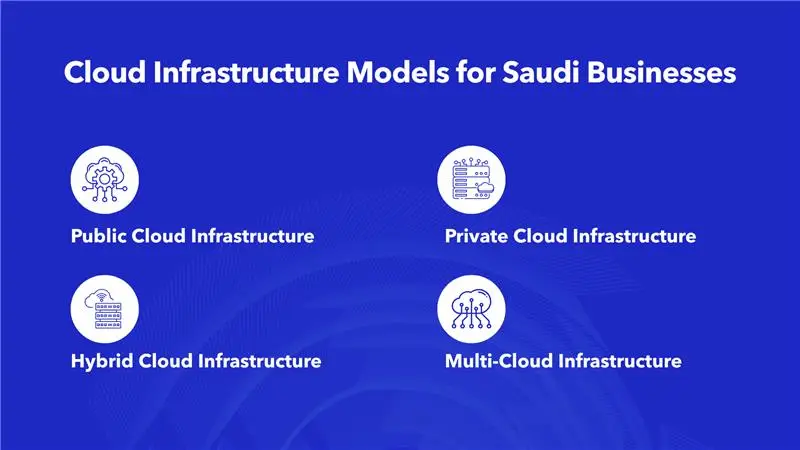
Understanding the different cloud infrastructure options helps Saudi organizations choose the best approach:
- Public Cloud Infrastructure: Services from providers like AWS, Microsoft Azure, and Google Cloud offer scalability and global reach—ideal for Saudi enterprises expanding regionally.
- Private Cloud Infrastructure: Dedicated environments that provide enhanced security and compliance, crucial for Saudi organizations in regulated sectors like banking and healthcare.
- Hybrid Cloud Infrastructure: Combines public and private clouds, allowing Saudi businesses to balance flexibility with control—especially relevant for data sovereignty requirements.
- Multi-Cloud Infrastructure: Uses multiple cloud providers to avoid vendor lock-in and optimize costs, a strategy increasingly adopted by sophisticated Saudi enterprises.
At Alnafitha, we help Saudi organizations navigate these options through our expert cloud infrastructure services tailored to regional requirements.
Performance Tuning: Maximizing Cloud Infrastructure Efficiency
1. Resource Right-Sizing for Optimal Performance
Cloud infrastructure optimization begins with accurate resource allocation. Many Saudi businesses over-provision resources, leading to unnecessary costs, while under-provisioning causes performance degradation.
Best Practices for Resource Right-Sizing:
- Continuous Monitoring: Implement detailed monitoring using tools like AWS CloudWatch, Azure Monitor, or Datadog to track actual resource utilization across your cloud infrastructure components.
- Performance Baseline Establishment: Document normal performance metrics during peak and off-peak hours for Saudi business cycles, considering regional patterns like weekend operations and seasonal demand fluctuations.
- Automated Scaling: Configure auto-scaling policies that respond to traffic patterns specific to Saudi markets, such as increased evening usage or Ramadan-related demand spikes.
- Instance Type Optimization: Regularly review and adjust instance types based on workload characteristics. For compute-intensive Saudi applications like video processing or AI workloads, specialized instances provide better price-performance ratios.
A major Saudi retail company reduced their cloud infrastructure costs by 35% after implementing right-sizing recommendations, discovering they were paying for 40% more capacity than needed during non-peak hours.
2. Network Performance Optimization
Network architecture affects cloud infrastructure performance, especially for Saudi businesses serving customers across the GCC region.
Key Network Optimization Strategies:
- Content Delivery Networks (CDNs): Deploy CDN services to cache content closer to Saudi users, reducing latency for applications serving customers in Riyadh, Jeddah, and other Saudi cities. Services like CloudFlare and AWS CloudFront improve user experience significantly.
- Regional Presence: Utilize cloud infrastructure regions geographically close to Saudi Arabia. AWS Bahrain, Azure UAE, and Google Cloud Qatar regions offer lower latency for Saudi businesses compared to European or Asian data centers.
- Network Architecture Design: Implement proper VPC segmentation, subnet design, and routing policies that align with Saudi data residency requirements while maintaining performance.
- Connection Optimization: For enterprises with on-premises infrastructure in Saudi Arabia, implement dedicated connections like AWS Direct Connect or Azure ExpressRoute to ensure consistent, high-bandwidth connectivity.
3. Database Performance Tuning
Database performance directly affects application responsiveness—critical for Saudi e-commerce platforms, banking systems, and government services.
Database Optimization Techniques:
- Query Optimization: Regularly audit and optimize database queries. Inefficient queries are among the top causes of poor cloud infrastructure performance for Saudi applications.
- Indexing Strategy: Implement proper indexing aligned with access patterns typical in Saudi applications, such as Arabic text search optimization and right-to-left language support requirements.
- Caching Layers: Use caching solutions like Redis or Memcached to reduce database load and improve response times for frequently accessed data in Saudi applications.
- Read Replicas: Deploy read replicas in strategic locations to distribute read traffic and improve performance for Saudi users across different regions.
- Database Right-Sizing: Choose appropriate database instance types and storage configurations based on actual workload requirements, not assumptions.
Learn more about database optimization strategies through our cloud infrastructure architecture services designed for Saudi enterprises.
4. Application-Level Performance Optimization
While cloud infrastructure provides the foundation, application architecture determines ultimate performance outcomes.
Application Optimization Strategies:
- Microservices Architecture: Break monolithic applications into microservices that can be independently scaled and optimized, allowing Saudi businesses to allocate resources precisely where needed.
- Serverless Computing: Use serverless functions for event-driven workloads, eliminating idle resource costs common in traditional cloud infrastructure setups.
- Asynchronous Processing: Implement message queues and asynchronous processing for non-critical tasks, improving user-facing performance for Saudi applications.
- Code Optimization: Regular code reviews and performance profiling identify bottlenecks that impact cloud infrastructure efficiency—an often-overlooked aspect of optimization.
- Container Optimization: For containerized workloads, optimize Docker images, implement proper resource limits, and utilize orchestration platforms like Kubernetes efficiently.
Cost Management: Controlling Cloud Infrastructure Expenses
1. Complete Cost Visibility and Monitoring
Understanding where cloud infrastructure costs originate is the first step toward effective cost management—particularly crucial for Saudi businesses managing budgets aligned with fiscal years and Vision 2030 milestones.
Cost Visibility Best Practices:
- Tagging Strategy: Implement detailed resource tagging that reflects Saudi business units, projects, cost centers, and compliance requirements. Consistent tagging enables accurate cost allocation and chargeback models.
- Cost Monitoring Tools: Deploy native tools (AWS Cost Explorer, Azure Cost Management, Google Cloud Cost Management) alongside third-party solutions like CloudHealth or Apptio Cloudability for deeper insights.
- Budget Alerts: Configure proactive budget alerts that notify Saudi finance and IT teams before overspending occurs, preventing unexpected cloud infrastructure costs.
- Regular Cost Reviews: Schedule monthly cost review meetings with stakeholders across Saudi operations to identify trends, anomalies, and optimization opportunities.
2. Reserved Instances and Savings Plans
For predictable workloads—common in Saudi enterprise environments—commitment-based pricing models offer substantial savings.
Commitment-Based Savings Strategies:
- Reserved Instances: Commit to one or three-year terms for stable workloads, achieving up to 72% savings compared to on-demand cloud infrastructure pricing. This approach works excellently for Saudi organizations with predictable, long-term workloads.
- Savings Plans: More flexible than Reserved Instances, Savings Plans offer significant discounts while allowing instance family changes—ideal for evolving Saudi business requirements.
- Convertible Reservations: For Saudi organizations uncertain about future cloud infrastructure needs, convertible reservations provide savings with flexibility to change instance types.
- Usage Analysis: Analyze historical usage patterns specific to Saudi business cycles before committing, ensuring reservations align with actual demand.
A Saudi financial services company reduced their annual cloud infrastructure costs by SAR 2.1 million by strategically implementing a mix of Reserved Instances for baseline workloads and Savings Plans for variable services.
3. Spot Instances and Preemptible VMs
For non-critical, fault-tolerant workloads, spot instances offer substantial cost reductions—up to 90% compared to on-demand pricing.
Spot Instance Strategies:
- Batch Processing: Run data analytics, rendering, and processing jobs on spot instances during off-peak hours when Saudi infrastructure demand decreases.
- Dev/Test Environments: Deploy development and testing environments on spot instances, significantly reducing cloud infrastructure costs for Saudi development teams.
- Stateless Applications: Use spot instances for stateless web application components that can tolerate interruptions without impacting Saudi user experience.
- Spot Fleet Management: Implement diversified spot fleet strategies across multiple instance types and availability zones to maximize availability while minimizing costs.
4. Storage Optimization
Storage costs often constitute 20-40% of total cloud infrastructure expenses for data-intensive Saudi organizations.
Storage Cost Optimization Techniques:
- Lifecycle Policies: Implement automated lifecycle policies that transition data through storage tiers—from hot storage to cool storage to archive—based on access patterns typical in Saudi business operations.
- Data Compression: Enable compression for suitable data types, reducing storage volumes and associated cloud infrastructure costs without compromising accessibility.
- Deduplication: Identify and eliminate duplicate data across your cloud infrastructure, particularly relevant for Saudi organizations with extensive document management systems.
- Snapshot Management: Regularly audit and clean up unnecessary snapshots and backups that accumulate over time, unnecessarily increasing storage costs.
- Object Storage Intelligent Tiering: Use services like AWS S3 Intelligent-Tiering that automatically move objects between access tiers based on usage patterns, optimizing costs without manual intervention.
Explore our data management solutions specifically designed for Saudi organizations’ storage optimization needs.
5. Network Cost Management
Network data transfer costs can surprise Saudi businesses, especially those serving customers across the GCC region or globally.
Network Cost Optimization:
- Regional Data Transfer Minimization: Architect applications to minimize cross-region data transfer, particularly expensive for Saudi businesses moving data between the Middle East and other global regions.
- CDN Utilization: While CDNs involve costs, they often reduce overall network expenses by caching content closer to Saudi users and reducing origin server bandwidth.
- Data Transfer Planning: Plan data migration and replication activities during off-peak periods when transfer costs may be lower and won’t impact Saudi business operations.
- VPN vs. Direct Connect: Evaluate whether dedicated connections justify their fixed costs compared to VPN alternatives based on your Saudi organization’s data transfer volumes.
Cloud Infrastructure Security: Balancing Performance and Protection
While optimizing for performance and cost, Saudi organizations must maintain robust security—given regional compliance requirements and data sovereignty regulations.
Security Optimization Strategies:
- Native Security Services: Use built-in cloud infrastructure security services rather than third-party solutions when possible, reducing both costs and complexity.
- Identity and Access Management: Implement least-privilege access policies through robust IAM strategies, protecting Saudi business assets while enabling operational efficiency.
- Encryption Strategy: Balance encryption requirements with performance impact, using hardware-accelerated encryption where available in your cloud infrastructure.
- Compliance Automation: Automate compliance checks relevant to Saudi regulations, reducing manual audit efforts while ensuring continuous compliance.
- Security Monitoring: Implement centralized security monitoring that doesn’t compromise cloud infrastructure performance through excessive logging or inspection overhead.
Learn about security services that protect Saudi businesses without compromising performance.
Automation and Infrastructure as Code (IaC)
Automation is fundamental to maintaining optimized cloud infrastructure as Saudi businesses scale and evolve.
Automation Best Practices:
- Infrastructure as Code: Deploy and manage cloud infrastructure using IaC tools like Terraform, CloudFormation, or Azure Resource Manager, ensuring consistent, reproducible, and version-controlled infrastructure across Saudi operations.
- Configuration Management: Use tools like Ansible, Chef, or Puppet to maintain consistent configurations across your cloud infrastructure components, reducing manual effort and errors.
- Automated Cost Optimization: Implement scripts and Lambda functions that automatically shut down non-production resources during off-hours, especially relevant for Saudi businesses observing weekend and prayer time schedules.
- Continuous Optimization: Deploy automated systems that regularly analyze cloud infrastructure utilization and recommend or implement optimizations without manual intervention.
- Policy-Based Governance: Establish governance policies that automatically enforce cost controls, security requirements, and architectural standards across Saudi business units.
Monitoring and Continuous Improvement
Cloud infrastructure optimization is not a one-time project but an ongoing process requiring continuous monitoring and adjustment.
Monitoring Strategy:
- Complete Observability: Implement monitoring across all layers—infrastructure, platform, and application—providing complete visibility into Saudi business operations.
- Performance Metrics: Track key performance indicators relevant to Saudi business objectives: response times, throughput, error rates, and user experience metrics.
- Cost Metrics: Monitor cost per transaction, cost per user, and cost efficiency ratios that align with Saudi business KPIs.
- Custom Dashboards: Create role-specific dashboards for Saudi business stakeholders, from executives to operations teams, ensuring relevant information reaches decision-makers.
- Alerting Strategy: Configure intelligent alerts that notify teams of anomalies without overwhelming them with false positives, maintaining operational efficiency.
Cloud Infrastructure Management Tools and Platforms
Selecting appropriate management tools enhances optimization efforts for Saudi businesses.
Recommended Tool Categories:
- Cloud Management Platforms (CMPs): Solutions like VMware CloudHealth, Flexera, and Morpheus provide unified management across multi-cloud cloud infrastructure environments common in sophisticated Saudi enterprises.
- Cost Optimization Platforms: Specialized tools like Spot.io, ProsperOps, and CloudZero focus specifically on cloud infrastructure cost reduction through automated optimization.
- Performance Monitoring: APM solutions like New Relic, Dynatrace, and AppDynamics offer deep visibility into application and infrastructure performance for Saudi business applications.
- Security Platforms: Cloud Security Posture Management (CSPM) tools ensure Saudi organizations maintain security while optimizing performance and costs.
Partner with Alnafitha to identify and implement the optimal cloud infrastructure management tools for your Saudi business requirements.
FinOps: Cultural Shift for Cloud Cost Management
Financial Operations (FinOps) represents a cultural transformation where engineering, finance, and business teams collaborate on cloud infrastructure decisions.
FinOps Principles for Saudi Organizations:
- Collaborative Accountability: Give Saudi engineering teams cost visibility while holding them accountable for cloud infrastructure efficiency.
- Real-Time Decision Making: Provide teams with immediate cost feedback, enabling informed decisions about resource consumption aligned with Saudi business priorities.
- Continuous Optimization: Establish processes for regular review and optimization of cloud infrastructure, treating cost management as ongoing rather than periodic.
- Business Value Focus: Evaluate cloud infrastructure costs in context of business value delivered, not just absolute expense—critical for Saudi organizations balancing innovation with fiscal responsibility.
Regional Considerations for Saudi Businesses
Saudi organizations face unique challenges requiring specialized cloud infrastructure optimization approaches:
Saudi-Specific Optimization Factors:
- Data Residency: Architect cloud infrastructure that complies with Saudi data localization requirements while optimizing for performance and cost across permitted regions.
- Regional Connectivity: Optimize network architecture considering Saudi Arabia’s connectivity infrastructure and bandwidth availability across different cities and regions.
- Compliance Requirements: Balance regulatory compliance requirements (SAMA, NCA, CITC) with optimization goals, ensuring Saudi businesses meet all obligations efficiently.
- Business Patterns: Align optimization strategies with Saudi business patterns, including weekend schedules, Ramadan operational changes, and fiscal year alignments.
- Language Support: Ensure cloud infrastructure solutions properly support Arabic language requirements, including right-to-left text processing and character encoding.
Getting Started with Cloud Infrastructure Optimization
For Saudi businesses beginning their cloud infrastructure optimization journey:
Step 1: Assessment Conduct a full assessment of current cloud infrastructure usage, costs, and performance across all Saudi operations.
Step 2: Baseline Establishment Document current performance metrics and cost allocations, establishing benchmarks for measuring improvement.
Step 3: Quick Wins Identify and implement quick optimization opportunities—often right-sizing and eliminating unused resources—delivering immediate value to Saudi businesses.
Step 4: Strategic Planning Develop a detailed optimization roadmap aligned with Saudi business objectives and Vision 2030 digital transformation goals.
Step 5: Implementation Execute optimization initiatives systematically, measuring impact and adjusting strategies based on results specific to Saudi operations.
Step 6: Continuous Improvement Establish ongoing optimization processes, making cloud infrastructure efficiency a permanent aspect of Saudi business operations.
Conclusion: Making Cloud Infrastructure a Competitive Asset
Cloud infrastructure optimization goes beyond cost reduction—it’s about turning technology infrastructure into a business enabler for Saudi companies competing in digital-first markets. Organizations that master both performance tuning and cost management can innovate faster, serve customers better, and achieve sustainable growth aligned with Saudi Vision 2030 objectives.
The key to successful cloud infrastructure management is treating optimization as an ongoing process rather than a one-time project. Saudi businesses must adopt automation, encourage collaboration between technical and financial teams, and maintain focus on business value delivery.
As cloud infrastructure continues evolving with emerging technologies like edge computing, serverless architectures, and AI-driven optimization, Saudi organizations that establish strong optimization foundations today will be ready to capitalize on tomorrow’s opportunities.
Ready to Optimize Your Cloud Infrastructure?
Is your Saudi business ready to improve your cloud infrastructure through expert performance tuning and cost management? Al Nafitha’s team of certified cloud infrastructure specialists brings deep expertise in optimizing cloud environments for businesses across Saudi Arabia.
We understand the unique requirements of Saudi enterprises—from regulatory compliance to regional connectivity challenges—and deliver customized cloud infrastructure optimization solutions that produce real results.
Contact our cloud infrastructure experts today to schedule a full assessment of your current environment and discover how much you could save while improving performance.
Let us help you transform your cloud infrastructure from cost center to competitive advantage, positioning your Saudi business for success in the digital economy.